Our Story

Our Strategies
Our Portfolio
How We Invest
Resources


Our Story
Our Strategies
Our Portfolio
How We Invest
Resources

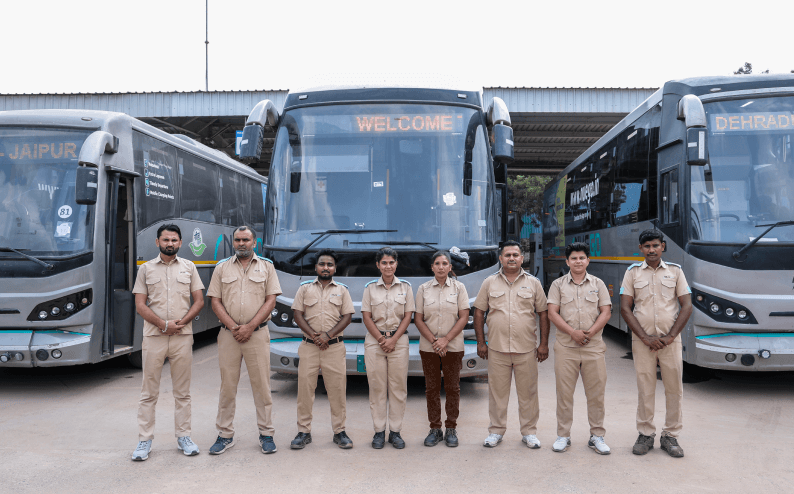
NueGo, GreenCell Mobility’s electric intercity bus brand, undertook India’s first all-electric bus journey from Kashmir to Kanyakumari in October 2024, covering 4,039 km across 11 states and over 200 cities. The expedition demonstrated the viability of electric mobility across diverse terrains— from the Himalayan foothills to the southern coastline.
Flagged off by Union Minister Nitin Gadkari in Nagpur, the journey was recognised by both the Asia Book of Records and the India Book of Records as the longest electric bus expedition.
This initiative demonstrated the operational reliability and long-distance performance of electric public transport, helping build confidence in the scalability of clean-mobility solutions.
GMR Visakhapatnam International Airport Limited (GVIAL) has received LEED Platinum Precertification under the LEED v4 BD+C rating system, recognising its application of green building principles such as energy-efficient systems, water conservation, sustainable site planning, and enhanced indoor environmental quality. Administered by the U.S. Green Building Council, the precertification affirms GVIAL’s alignment with global sustainability standards and its potential to achieve full LEED Platinum certification once complete.

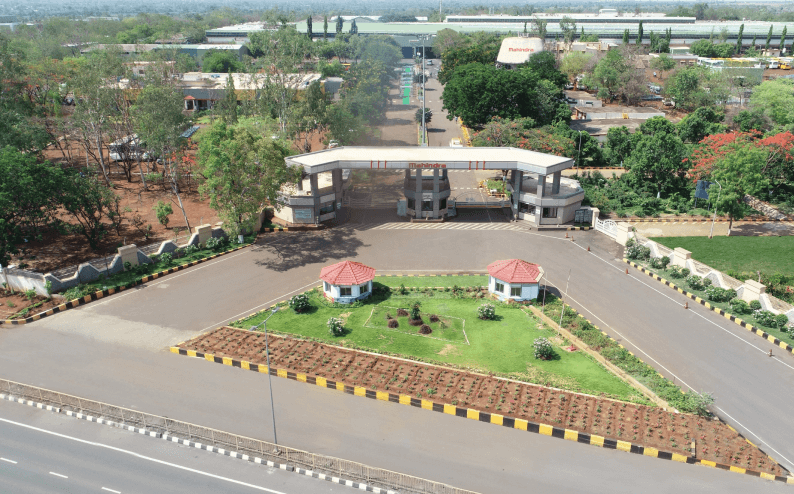
Facing with severe water stress in Zaheerabad, Mahindra & Mahindra partnered with ICRISAT and the Groundwater Department, Government of Andhra Pradesh, to devise a long-term water resilience strategy. The plan combined rainwater harvesting, recharge pits, check dams, and treated wastewater reuse to systematically replenish underground aquifers. Over two decades, this integrated watershed development raised the water table from a critical depth of 137 metres to a far more accessible 18 metres- a substantial recovery of nearly 120 metres. Agricultural productivity also improved significantly, with crop yields rising between 15–40% as groundwater became more readily available.
In Bengaluru’s innovation corridor, QpiAI, a YourNest Fund III portfolio company, is advancing the convergence of artificial intelligence and quantum computing to address complex challenges in supply-chain optimisation, drug discovery and smart city development.
As one of the participants in India’s National Quantum Mission, QpiAI is building the country’s first fully homegrown 25-qubit quantum computer, supported by AI-driven control systems and hybrid software platforms. Its industry-specific solutions, such as QpiAI Pharma for molecular modelling and QpiAI Logistics for supply chain optimisation, are already showing real-world impact. With 11 patent filings and projects such as the Amaravati Quantum Valley, QpiAI is positioning India to move towards quantum technologies.

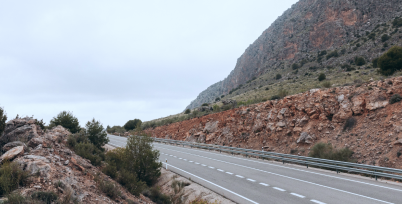
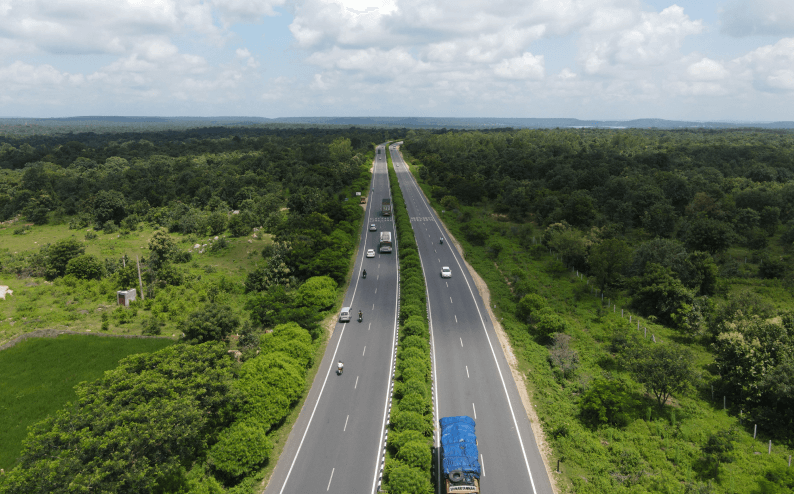
As part of AJUHI’s sustainability mission, Athaang has implemented Cement Grouted Bituminous Mix (CGBM) technology to enhance the durability and riding quality of the main carriageway. Developed in collaboration with scientists from the Central Road Research Institute (CRRI), this road construction technique leads to a significant improvement in performance, sustainability, and cost efficiency.
The adoption of CGBM has reduced resource consumption, minimising the use of bitumen and enhancing resilience against extreme weather events. Improved road conditions have led to safer and more comfortable commutes, reducing accident risks and enhancing user experience. Furthermore, the development and implementation of CGBM technology in collaboration with CRRI demonstrates a commitment to global best practices, regulatory compliance, and scientifically backed innovation
NIIF endorses the One Planet Sovereign Wealth Fund (OPSWF) Initiative, a platform created by global sovereign wealth fund community, asset managers and asset owners. The underlying objective of OPSWF is to help organisations understand climate change risks in their investment horizons and decision making and explore investment opportunities around the transition to low emissions economy. As an active member of OPSWF, NIIF has access to global best practices and policies that support the firm’s commitment in making sustainable investments across its funds. NIIF has internalised the OPSWF Initiative principles to address the climate change risks emanating from its investment.
Alignment: Build climate change considerations, which are aligned with the funds’ investment horizons, into decision-making.
Ownership: Encourage investee companies to address material climate change issues in their governance, business strategy and planning, risk management and disclosure to promote value creation.
Integration: Integrate the consideration of climate change-related risks and opportunities into investment management to improve the resilience of long-term investment portfolios.

At NIIF, we are committed to embedding ESG factors across our investment strategy. We recognise that responsible investment is essential for managing risk, generating sustainable returns, and contributing to a resilient global economy. Our rationale is grounded in the belief that ESG integration enhances long-term value creation for our clients, shareholders, and the broader community.
Reaffirming our commitment, we became signatory to the Principles for Responsible Investment (PRI) in September 2025. PRI, set up with the support of the United Nations, is a globally recognised voluntary initiative with over 5000 members. It aims to promote the integration of ESG factors into investment decision-making processes.
Becoming a PRI member as an “Asset Owner” is a strategic move for NIIF Limited. It reinforces NIIF’s commitment to responsible investment, provides us access to global networks and industry-leading resources, enables benchmarking against peers, and aligns our ESG practices with the highest global standards.Moving forward, we will continue to augment our ESG governance framework, advance data-driven assessment tools, and publish periodic progress updates to ensure transparency and accountability in our responsible investment journey.






 Learn More