






"Returns and impact" : Indian PE fund takes Danske Bank's elite clients on investment recon mission


 Download as PDF
 08 July, 2026
This article was originally published by AMWatch on 7 July 2026. Written by Elliot Smith. Link to article: https://amwatch.com/AMNews/private_markets/article19440486.ece
India’s National Investment & Infrastructure Fund (NIIF) is looking to build confidence among Nordic investors to commit capital to the country’s private markets.
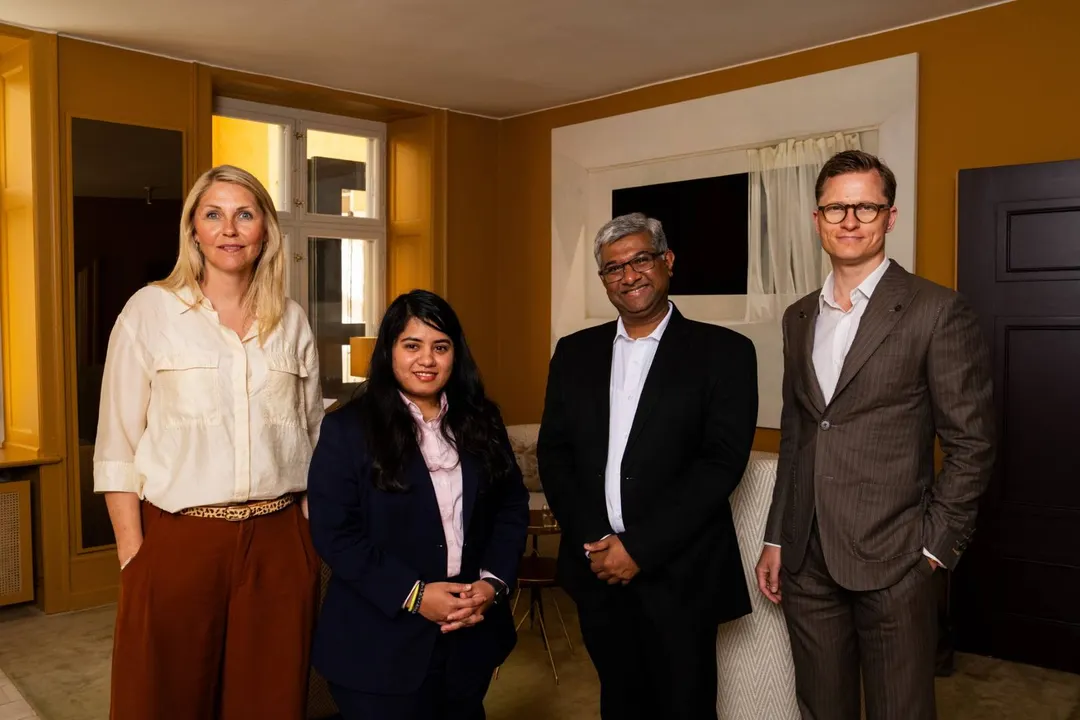
Danske Bank recently took a delegation of 25 of its elite private banking clients to India in a bid to ”demystify” potential investment in the country’s private markets. The trip was part of an ongoing partnership with India’s National Investment & Infrastructure Fund (NIIF) and Copenhagen-based consultancy Pontoka, with the aim of building knowledge and familiarity with the country among wealthy investors.
”It’s crucial for me that we constantly challenge what our customers expect from us and that we keep pushing the limits for how we as a bank are being relevant. The investor trips are an important part of this value proposition – bringing a group of customers to new parts of the world to explore and understand a potential new investment destination, while at the same time building new relations and network,” says Stine Jersie Olsen, Nordic head of private banking growth at Danske Bank. ”When curating trips like these, we look for partners who combine strong local insight, a broad network and the ability to provide participants with nuanced perspectives on the growth drivers shaping the local economy and the opportunities across different asset classes.”

When curating trips like these, we look for partners who combine strong local insight, a broad network and the ability to provide participants with nuanced perspectives on the growth drivers shaping the local economy and the opportunities across different asset classes.
NIIF is a sovereign-backed asset manager in which the Indian government holds a 49% stake, with the remaining 51% largely held by global investors such as pension funds, sovereign wealth funds and insurance companies. The fund currently manages around USD 5bn.
Around 18 months ago, the fund identified Europe as a ”clear white space” in its investor base and set out to expand, its managing partner for private markets, Anand Unnikrishnan, tells AMWatch during a recent visit to Copenhagen.
“We started out with Scandinavia, because obviously there’s large pools of capital, capital that hasn’t traditionally done much in India, capital that we felt was missing out on the India opportunity, for two primary reasons,” he explains.
“One, because of lack of familiarity, because I suppose there’s not much narrative about India in this part of the world. Two, because India can be a market where access is difficult. So, our goal is to become local partners to global investors who want to access India.”
Around that time and through it’s partnership with Pontoka, NIIF became an Indian knowledge partner to Danske Bank, which was looking to give its ”elite” private banking clients the opportunity to better understand the Indian growth opportunity. It is now talking to investors across six countries in Europe.
“Our goal is to mobilize global capital to invest in the India opportunity across asset classes – the infrastructure, which is transportation, energy, the data centers, the communication, or private markets, where we build a portfolio across high-growth businesses, early-stage companies through technology-focused startups and so on,” Unnikrishnan adds.
”Scale and sophistication”
The 25 clients met with a range of market participants, funds, start-ups and founders across multiple cities and regions, and heard a range of presentations aimed at illuminating how to access the Indian private markets ecosystem, from due diligence and capital attraction to climate and social factors.
“There is a bit of a prevailing stereotype that India’s private markets are not mature, but the fact is that the combined AUM in private capital funds in India is now more than EUR 105bn, and you’ve had a lot of successful ventures in recent years and great DPIs (distributed to paid-in capital) to show for it,” Mathias Pontoppidan, managing partner at Pontoka, tells AMWatch.
Along with hearing from leading private equity players and major overseas allocators in India, the Danske contingent also visited flagship projects to observe successful growth cases and recently-listed companies, along with engaging in a fireside chat with a member of Sweden’s Wallenberg family about their Indian investment ventures.
“That family has decided to be very proactive in ramping up their investments in India, so I think that was also very interesting for Danish families to take in their perspectives, because they are a significant family in the ecosystem in the Nordics and an example to follow for other family offices,” Pontoppidan adds.
Outside of the pure return angle, Danske’s private banking clients were also introduced to a host of NGOs working on the ground to alleviate some of India’s most pressing social issues.
Both Unnikrishnan and Pontoppidan highlight the importance of this aspect for Nordic investors, who can see both the positive social impact of potential capital deployment, along with potential returns from participating in closing those socioeconomic gaps in one of the world’s fastest-growing economies.
“The idea is to bring investors who are curious about India but not yet fully familiar with the market, create an opportunity for them to touch and feel and get a real sense of what is happening in the market, talk to peers or organizations that have been investing in India and profiting from the Indian growth story, and then get comfortable over time,” Unnikrishnan adds.
The trip was well-received by investors and Danske Bank’s private banking growth team, which plans to run another visit in November, and NIIF hopes this partnership can grow the confidence of Denmark’s business and investment community to pursue opportunities in India.
“There were two words that were used consistently that have remained with me. One is scale, so the scale of investment opportunity that India offers. Two is sophistication in the quality of potential partners,” Unnikrishnan recalls
Momentum in the Nordics
Pontoppidan has been meeting with LPs (Limited Partners) in Denmark to discuss Indian investments since 2012, and believes curiosity is beginning to translate to active mapping of the market and planning for entry.
“In a global market environment, you could have years where there’s more volatility, and in an emerging market like India – yes, you could have ups and downs,” Unnikrishnan adds.
”There are cycles that come over a 10-15-year period, so it’s about building investor confidence on how they can work with a local partner to invest in a market which has a certain element of risk, but is still a very profitable investment opportunity because of the underlying fundamental growth of the economy.”
NATIONAL INVESTMENT & INFRASTRUCTURE FUND (NIIF)
Manages USD 4.9bn in assets across 75+ direct and indirect investments Partnered with Danske Bank Private Banking to facilitate investor delegations to India Indian government holds a 49% stake, with the remaining 51% largely held by global investors such as pension funds, sovereign wealth funds and insurance companies
NIIF already works with institutional investors and LPs around the world, including Canada, Japan, Australia, the UAE and Singapore, and Pontoppidan suggests these existing entries into the market ”could provide a source of inspiration for the Nordic LP ecosystem.”
“Whether it’s private banking clients or large institutional LPs, when they actually make the trip over to meet with people and see the growth and the cases, that’s when they are able to absorb it and really understand ‘okay, it’s not just right – we are actually quite late to the game, because there are a lot of other overseas players doing this’,” he adds.
India is now the largest investment market for Danish pension companies among the BRIC (Brazil, Russia, India, China) economies, Danish business daily Børsen reported late last year, with the total value of Indian holdings now exceeding DKK 23bn (EUR 3.1bn).
“The fact that the largest bank in the country is bringing some of its top-tier clients into India to get familiar with the opportunity is a really big deal for the bank and for India,” adds Unnikirishnan.
“I think that itself is a big shift and that is the shift we are trying to create within the European continent, where we’ve previously seen limited flows on the private market side from Europe into India compared with North America, Japan, Australia and Singapore. That is the shift we are trying to help create.”
NIIF’s latest fund, Private Markets Fund II, recently raised around USD 750m and hopes to reach its USD 1bn target within the next 12 months, in part by broadening its investor base in Europe.
”Lifting all boats”
India’s capital markets are maturing at a rapid rate, with annual investment flows into the country of around USD 50bn a year and realized distribution to investors of around USD 30bn a year. Just ten years ago, Unnikrishnan estimates that this would have been around 10-15% of that figure, while in another five to seven, it could be double. But Unnikrishnan notes that at present, much of the private market investment from overseas institutions comes via large global fund managers that operate in the large buyout section of the Indian economy.
“There is a huge mid-cap PE and early stage or venture capital ecosystem in India – 80% or more of the transactions in India happen in that segment and that is where it’s hard for investors to access India without either a local team or a local partner on the ground,” he explains.
As such, NIIF hopes to help foreign LPs gain enough familiarity with the market to make the kind of commitment needed to invest directly.
Yet in exposing investors to the myriad of social challenges India still faces, Pontoppidan also aims to make a more systemic and ESG-oriented investment case.
“We felt it would only be a part of the big picture if we had isolated the group in fancy boardrooms and fancy company facilities. I think it’s very important that with India you’re very transparent about the advantages but also the areas of improvement, and also the journey that India as a nation is on in terms of lifting all boats of society,” he says.
Unnikrishnan presents the underlying thesis behind NIIF as the belief that, as India develops economically, more people will be lifted out of poverty through increased per capita incomes, better access to healthcare and the financial ecosystem, and protection and preservation of the natural environment.
”In the last two decades we’ve lifted somewhere around 300 million people out of poverty and all that’s happening because of economic development. The opportunity in India is that investment returns and development outcomes can reinforce each other. Growth capital can support businesses that expand healthcare access, financial inclusion, environmental solutions and generate formal employment,” he argues.
“I think the combination of the two is really what is interesting for investors and whether it’s wealthy families or pension funds or development financial institutions, the whole story is about how we invest in an emerging market where we are profiting from the opportunity as well as causing positive development impact, and that’s really the tool that we bring together.”
One example, he says, is the NIIF Private Markets platform’s investment in a hospital business in Rajasthan, which generated a 30% annualized internal rate of return over a five- to six-year holding period while supporting the construction of four hospitals in emerging cities and expanding access to healthcare for hundreds of thousands of patients.
“These are the kind of things that we want to do and these are the kind of things that investors like, so we bring both the returns and the impact together,” he concludes.


